
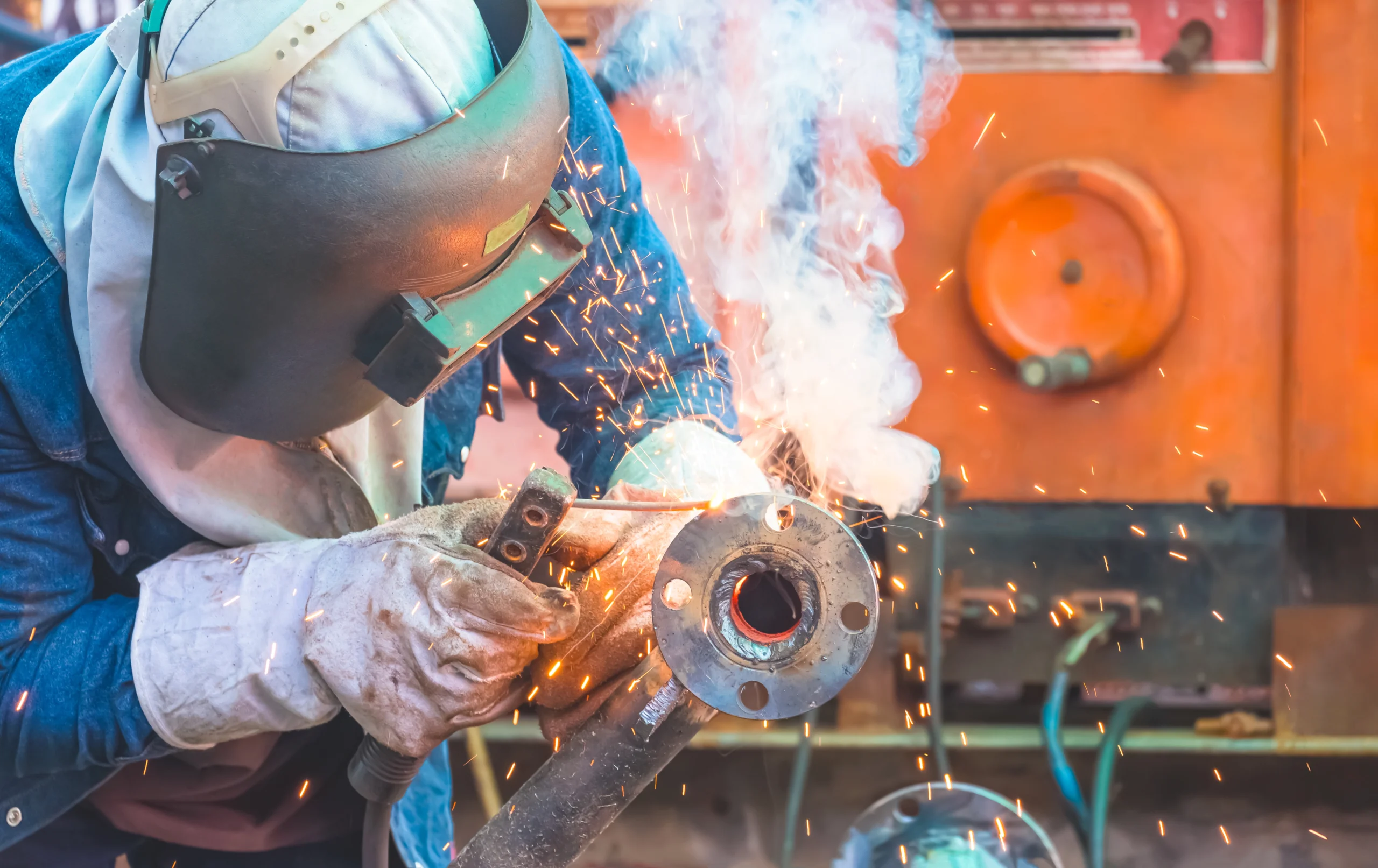
Any worker who handles metal parts, works in extreme heat, or uses electricity is at a higher risk of workplace injury. Those working in the welding profession perform all three of those tasks daily. By understanding the most common causes of welding accidents, welders can take the necessary steps to protect themselves from serious workplace injuries.
Most Common Causes of Welding Accidents
Electrical Shock
One of the most common causes of welding accidents is electrical shock. When metal pieces carrying electrical voltage touch, the circuit can cause primary or secondary voltage shock. Without proper grounding, these shocks can enter a welder’s body. Electrical shock can result in first and second-degree burns. Using proper grounding equipment and following safe work practices can prevent electrical accidents.
Toxic Exposure
The welding process often produces toxic fumes that can be dangerous to workers who inhale them daily. Welding fumes can contain harmful chemical byproducts, including lead, manganese, aluminum, carbon monoxide, carbon dioxide, and arsenic. Toxic exposure to metal oxide compounds can lead to the development of respiratory illnesses and lung cancer. To avoid injuries from toxic exposure, welders should work in well-ventilated areas with properly maintained equipment.
Welder’s Flash
Also called arc eye, welder’s flash occurs when a welder is exposed to a bright flash of ultraviolet light coming from a welding torch. Welder’s flash typically causes corneal inflammation and can lead to light sensitivity, blurred vision, infection, and even vision loss. Workers can protect themselves from flash burn by wearing coated safety googles, a welder’s mask, or specially designed sunglasses.
Hearing Loss
Noise pollution is another potential cause of welding-related injuries. The average welding working environment produces over 85 decibels of noise. Without proper ear protection, welders risk significant hearing loss or damage to the ear canal.
High Temperatures
High temperatures generated by the welding arc can create dangerous working conditions. Welders face significant burn risks from fire, given the necessary high temperatures and amount of chemicals involved in the welding process. Molten metal and hot slags also present significant burn risks. Hot sparks and flying metal can pose an additional safety risk to workers. Debris landing in a welder’s eye or penetrating the ear canal can cause irreparable damage, affecting the welder’s vision or hearing for the rest of their lives.
Compensation for Injured Workers
Welding accidents can result in serious injuries requiring years of medical treatment and may result in an inability to return to work. Significant medical expenses and lost wages can place great financial stress on families caring for an injured worker. Employers who fail to provide a safe working environment for their workers may face liability when a workplace injury takes place. The first step in determining whether compensation may be available for a workplace injury is to contact a Delaware work accident lawyer to discuss your case.
Rhoades & Morrow Assists Workers Injured in Welding Accidents in Delaware
If you or a loved one has suffered injuries in a welding accident, the experienced work accident lawyers at Rhoades & Morrow can help you receive the maximum amount of compensation for your injuries. Our offices are conveniently located in Wilmington, Newark, Milford, and Lewes to serve work accident victims throughout the state, including Elsmere and Seaford. Contact Rhoades & Morrow today to schedule a free consultation.